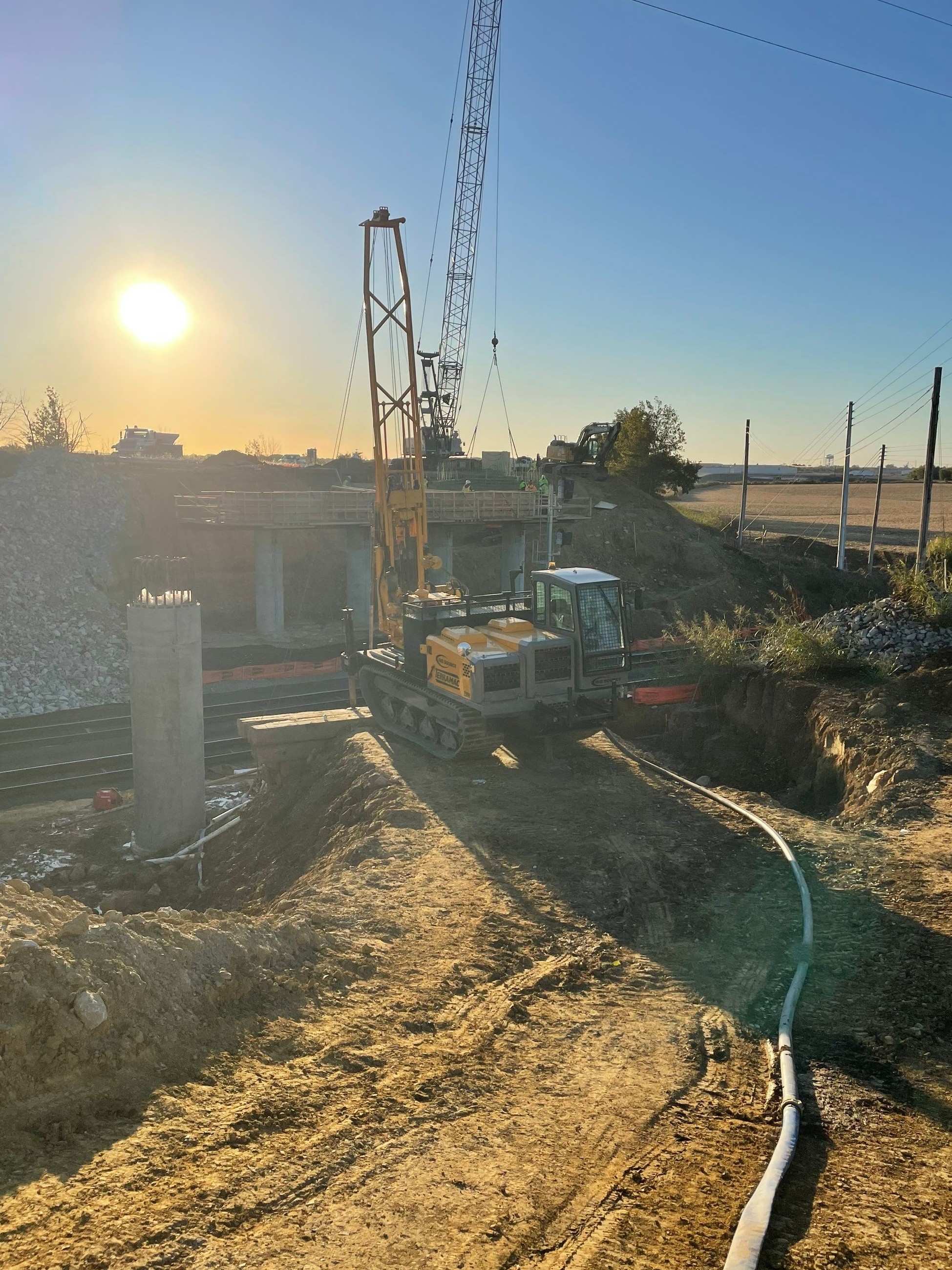
INDOT Highway Bridge – Kokomo, Indiana
REN designed a drilling and grouting program to relieve artesian pressures, rebuild washed-out shaft bases, and restore capacity for an INDOT bridge.


Project Introduction
During construction of a new INDOT highway bridge in Kokomo, Indiana, contractors encountered significant artesian groundwater pressures during installation of four drilled shafts. As the shafts were excavated and tremie concrete was placed, upward water flow washed cement paste from the bottoms of the excavations, preventing proper bond formation and reducing the end-bearing capacity required for bridge support.
REN Engineering & Planning was engaged to assess the extent of the washout, reduce artesian pressures, and rebuild the bottom-bearing zones using engineered grouting so that each drilled shaft could meet INDOT’s structural and performance requirements.
Key Highlights
Artesian Groundwater Challenges
- Artesian flow entered the shaft excavations from below, removing cement paste before the concrete could set.
- All four drilled shafts exhibited defects consistent with bottom degradation and washout.
- SID testing and visual evaluations confirmed insufficient bearing material at the base of each shaft.
- Continued upward pressure prevented proper cleanup, bottom inspection, and conformance with INDOT shaft construction standards.
Loss of Bearing Capacity at Shaft Bottoms
- Washout of cement paste caused the bottoms to contain low-density, noncemented soil-grout slurry rather than competent bearing material.
- These conditions compromised:
- End bearing
- Axial capacity
- Structural reliability under service loads
- The issue was widespread enough to threaten schedule, sequence, and long-term performance of the bridge foundations.
Engineered Mitigation Program Designed by REN
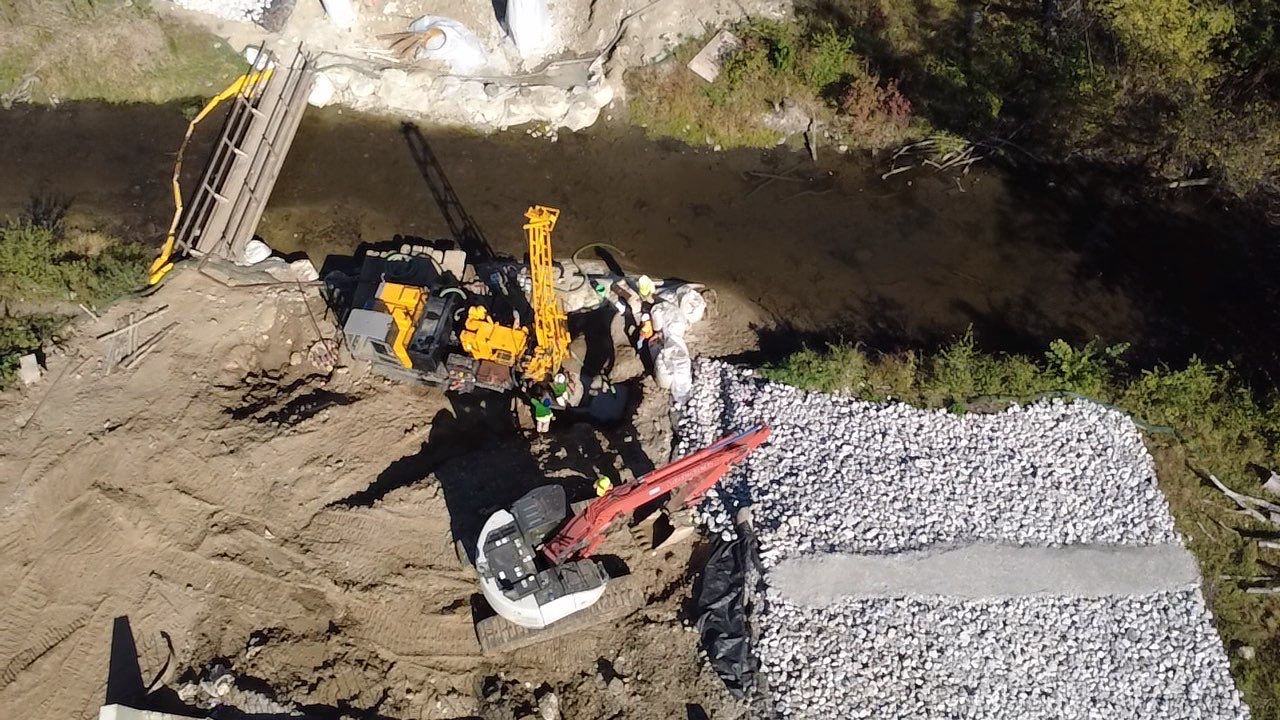
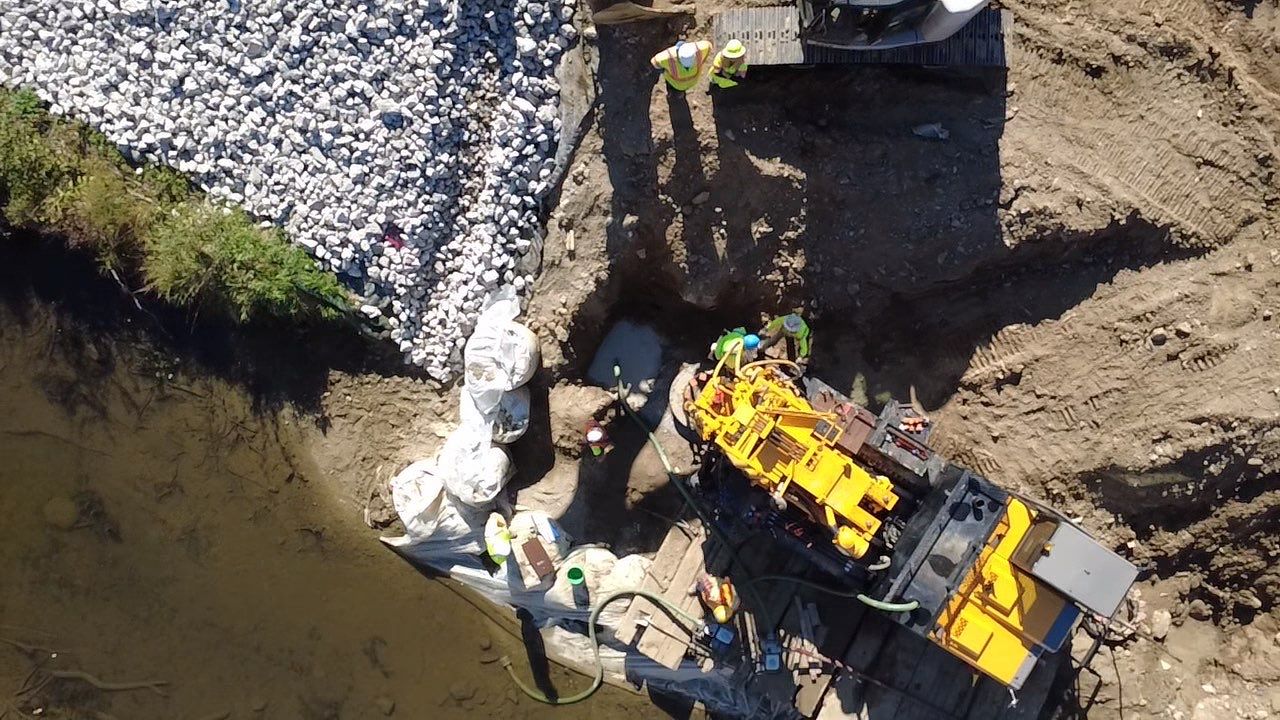
REN developed a targeted drilling and grouting program to restore the four shafts:
1. Artesian Pressure Relief
- Relief holes drilled around each affected shaft.
- Penetrated the pressurized aquifer feeding the upward flow.
- Achieved measurable reductions in head pressure.
2. Bottom Reconstruction Grouting
- Low-mobility, high-strength grout injected into the degraded bearing zones.
- Grout replaced washed-out cement paste and rebuilt a dense, load-bearing base.
- Pressure-controlled injections avoided fracturing, blowouts, or disturbance of placed concrete.
3. Perimeter Improvement
- Grouting of surrounding soils increased lateral confinement.
- Stabilized disturbed zones created during earlier shaft attempts.
- Allowed safe and reliable re-excavation and cleaning for final concrete placement.
Successful Restoration of All Four Drilled Shafts
- Artesian pressures reduced sufficiently to re-enter the excavations.
- Bearing layers beneath each shaft reconstructed to engineered specifications.
- Tremie concrete placed under stable conditions with no further washout.
- Follow-up integrity testing confirmed restored performance and compliance with INDOT requirements.
Conclusion
REN’s engineered drilling and grouting program successfully restored the structural integrity of all four drilled shafts impacted by artesian water in Kokomo, Indiana. By reducing upward flow and replacing washed-out cement paste with engineered grout, REN rebuilt the end-bearing zones essential for load transfer. The project enabled INDOT’s bridge construction to proceed safely, on schedule, and with confidence in the long-term performance of the foundation system.