Saint Louis Zoo Shotcrete Wall - Saint Louis, MO
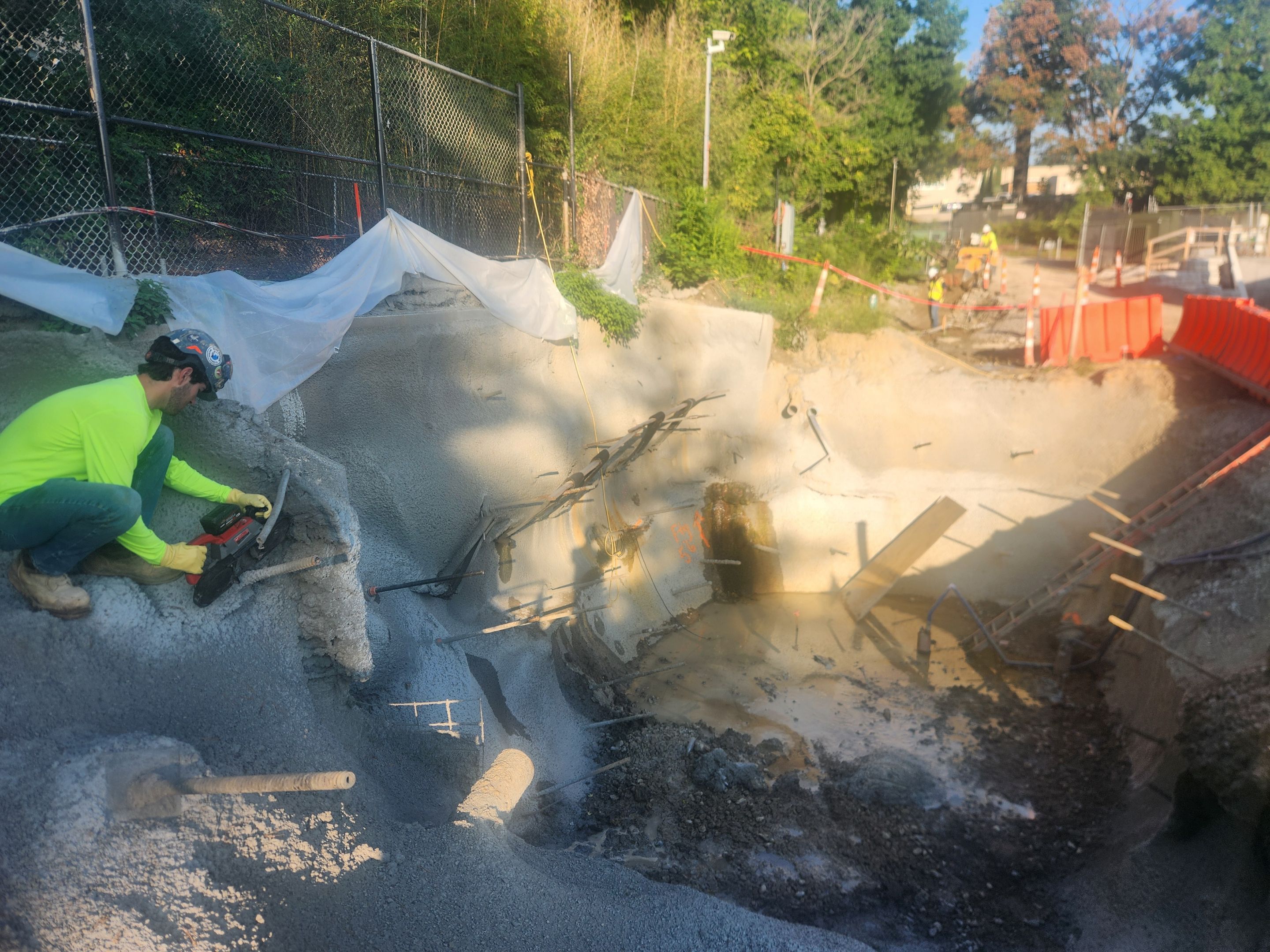
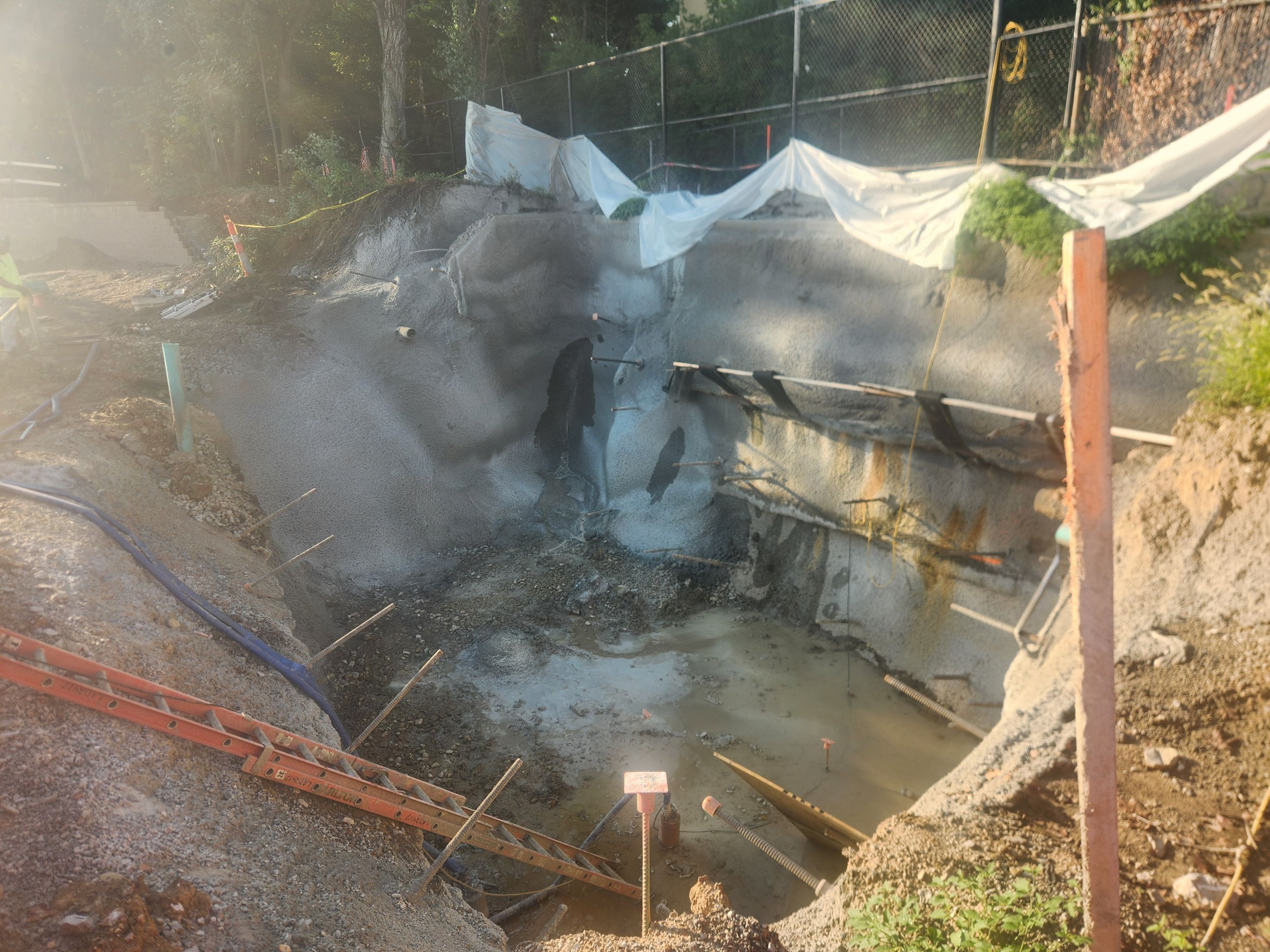
REN designed and installed an adaptable soil-nail earth-retention system that kept the excavation stable when undocumented fill and debris were exposed.



Project Introduction
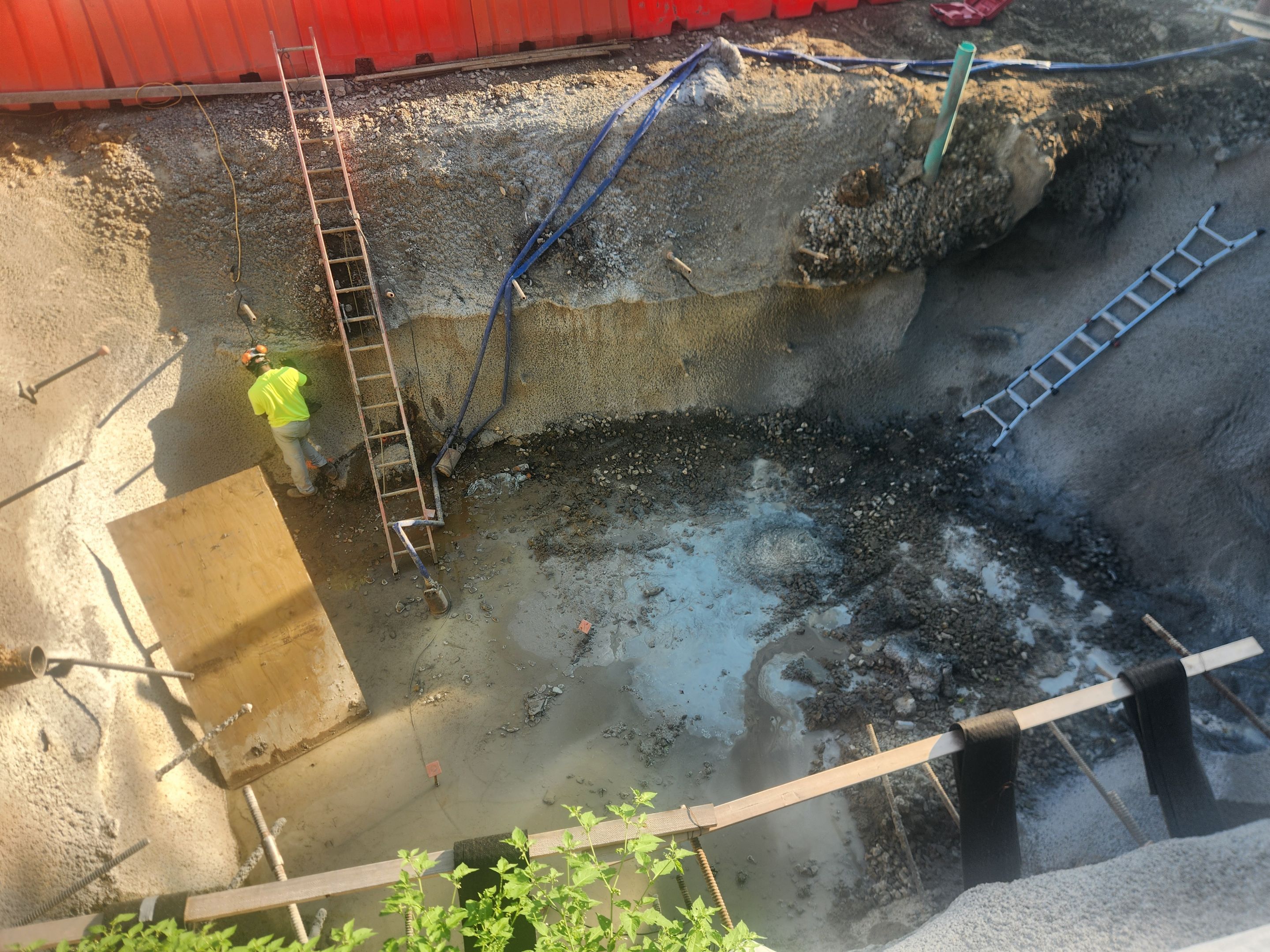
The St. Louis Zoo's Destination Discovery project required a new pump house serving the development's splashground features. The structure was constructed within an extremely constrained area, requiring an excavation approximately 20 by 24 feet with four supported faces. The deepest and most sensitive cut was immediately beside the Zoo Railroad, leaving little room for conventional shoring, equipment staging, or material handling.
REN developed a staged soil-nail and shotcrete system that allowed the excavation to advance from the top down while protecting the railroad corridor, nearby fencing, utilities, and proposed foundations. The work demanded close coordination between design, excavation, soil-nail drilling, grouting, reinforcing, and shotcrete placement.
Key Highlights
- Supported an approximately 20-by-24-foot, four-sided pump-house excavation in a highly congested work area.
- Stabilized the deepest excavation face immediately adjacent to the St. Louis Zoo Railroad.
- Combined drilled and grouted hollow-bar soil nails with a reinforced shotcrete facing.
- Adapted the shoring to variable fill, soil, shale, and debris exposed during construction.
- Developed remedial measures and supplemental designs as actual conditions became visible.
- Added support where required while coordinating around foundations, piping, utilities, and limited access.
- Integrated engineering, drilling, grouting, testing, and field support to reduce delays and keep construction progressing.
Conclusion
The Destination Discovery Pump House illustrates the value of pairing specialty geotechnical design with direct field installation experience. REN's soil-nail and shotcrete solution created a stable working excavation beside an unusually sensitive railroad constraint, while the team's ability to evaluate unexpected soil and debris and issue timely remedial designs helped the project advance safely through changing field conditions.